The transition from high school to higher education brings a significant shift in academic expectations. For many undergraduate, postgraduate, Master's, and PhD students, learning how to write an essay as a university student can feel challenging. University essays require more than just summarizing facts; they demand critical thinking, deep research, structured arguments, and precise referencing.
Many students enter higher education accustomed to writing descriptive essays that simply report information. However, university-level assessments require a shift toward analytical and evaluative writing. If you are struggling to adjust to these new academic standards, utilizing professional essay writing services can provide valuable guidance and structurally sound model papers to help you learn.
This guide outlines the essential steps to plan, draft, structure, and refine a high-quality university essay that meets rigorous academic standards across institutions in the UK, USA, and Australia.
Understanding University Essay Expectations
Before you type your first word, it is important to understand what university-level writing actually entails. Unlike school essays, which often rely on simple five-paragraph templates, a university essay is an exercise in critical analysis.
Moving Beyond Summary to Critical Thinking
The most common feedback students receive is that their writing is "too descriptive." To write a formal essay for university, you must move beyond simply stating what happened and focus on why and how.
Critical thinking involves:
- Analyzing the strengths and weaknesses of existing research.
- Comparing different academic perspectives and identifying gaps in the literature.
- Synthesizing information to build a coherent, evidence-based argument of your own.
How to Start a University Essay: The Pre-Writing Phase
A common mistake is diving straight into writing without adequate preparation. Learning how to start a university essay efficiently begins with systematic planning, thorough research, and structured outlining.
1. Deciphering the Essay Prompt
Before conducting research, analyze the essay question. Look for command words that dictate the approach you need to take:
- Discuss / Evaluate: Weigh the pros and cons of a theory or concept, using evidence to support your final judgment.
- Analyze: Break a complex topic down into its core components and explain how they relate to one another.
- Compare and Contrast: Identify similarities and differences between two or more theories, historical events, or texts.
2. Conducting Academic Research
Relying on standard search engines is rarely sufficient for university essay writing. Instead, utilize academic databases such as Google Scholar, Scopus, JSTOR, or your university's online library catalog. If you find the research phase overwhelming, our professional research paper writing experts can help gather and synthesize credible academic sources for your topic.

3. Developing a Strong Thesis Statement
Your thesis statement is the backbone of your entire paper. It is a concise, one- or two-sentence summary of your main argument. While a standard essay requires a single thesis statement, longer projects like Master's or PhD papers require a much deeper framework. If you are working on a major capstone project, our specialized thesis and dissertation help can guide you through formulating a robust research question.
4. Creating a Detailed Essay Outline
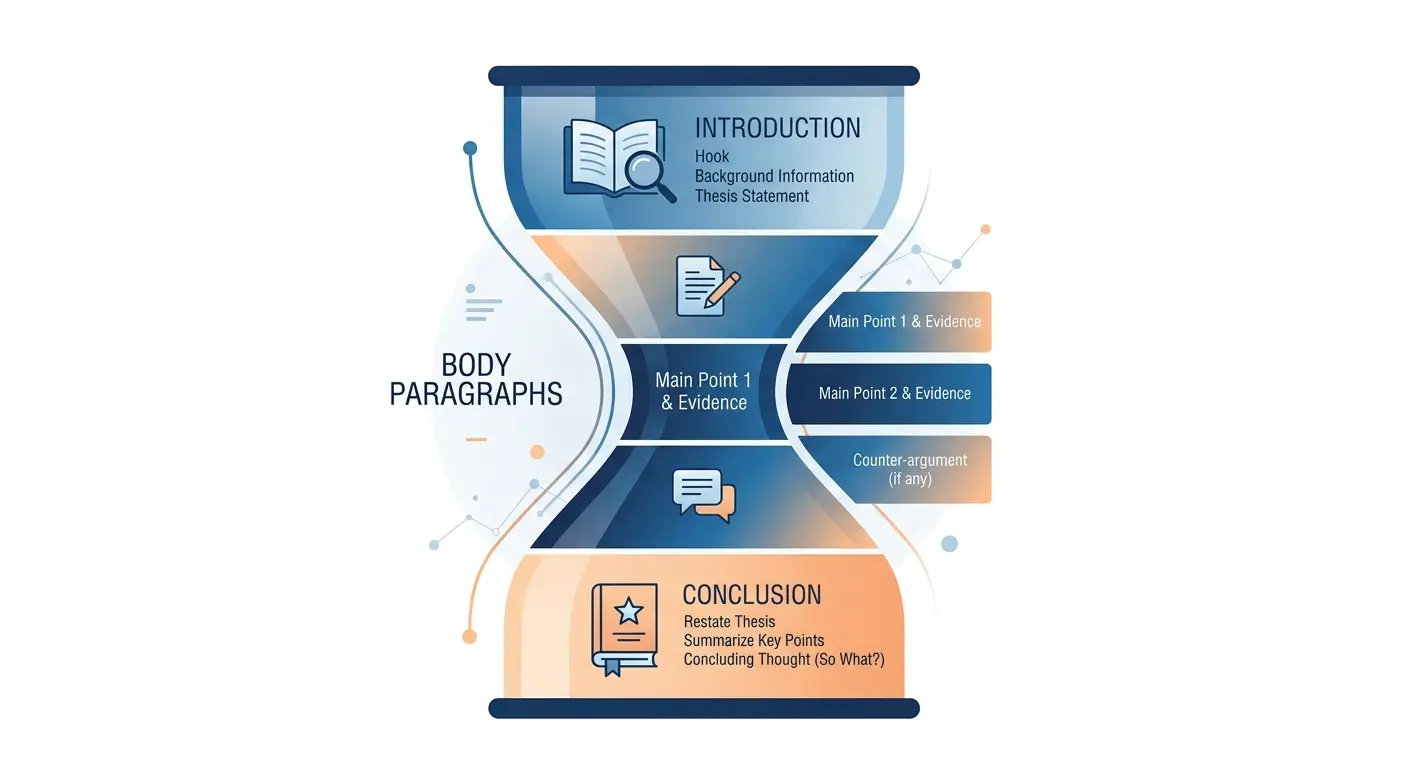
An essay outline acts as your road map. A standard university essay structure outline should look like this:
- Introduction: Hook, background information, thesis statement.
- Body Paragraphs (typically 3 to 5 main points): Topic sentence, evidence, analysis, transition.
- Conclusion: Restatement of the thesis, summary of key points, final analytical thought.
The Standard University Essay Structure
Adhering to a logical university essay structure keeps your reader engaged and helps them follow your line of reasoning.
Crafting an Engaging Essay Introduction
The introduction sets the tone for your paper and should make up about 10% to 15% of your total word count. To write a strong essay introduction:
- The Hook: Start with a broad statement, a relevant statistic, or a significant academic debate.
- Context: Provide necessary background information to help the reader understand the topic.
- Signposting: Briefly mention the key areas your essay will cover.
- The Thesis Statement: Position this clearly at the end of the introductory paragraph.
Writing Analytical Body Paragraphs
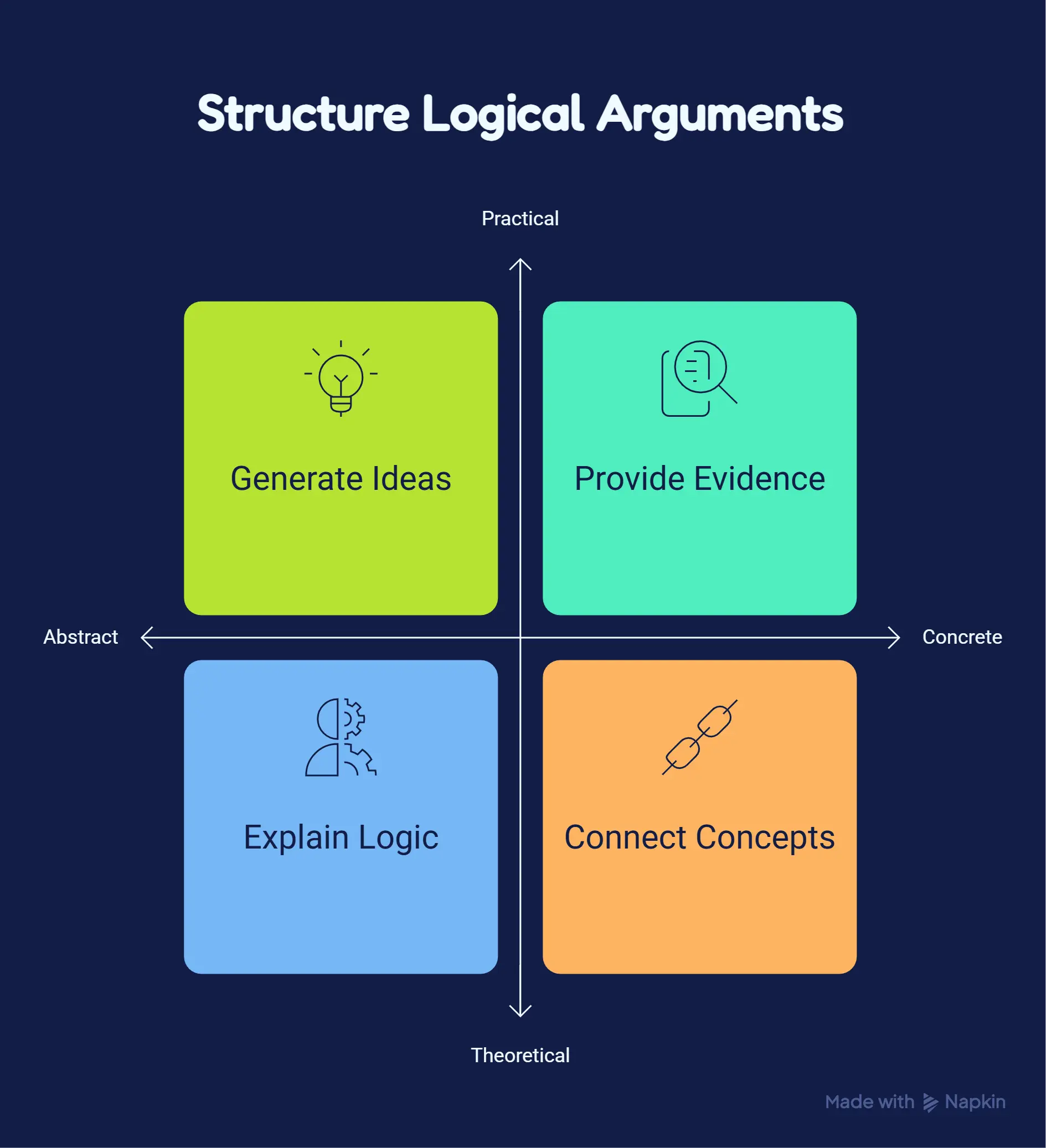
Each body paragraph must focus on a single main idea that supports your thesis statement. Use the PEEL framework (Point, Evidence, Explanation, Link) to keep your writing structured.
Concluding with Impact
The essay conclusion should tie all your arguments together without introducing any new information. A solid conclusion should:
- Restate your thesis statement using different phrasing.
- Summarize the main arguments presented in your body paragraphs.
- Provide a final thought on the broader implications of your research.
How to Format an Essay for University
Proper presentation is essential for academic credibility. Most universities deduct marks for poor formatting and incorrect citations.
| Element | Standard Academic Expectations |
|---|---|
| Fonts | Times New Roman (12pt), Arial (11pt), or Calibri (11pt) |
| Spacing | Double-spaced (2.0) or 1.5 line spacing |
| Margins | Standard 1-inch (2.54 cm) margins on all sides |
| Page Numbers | Top-right header or bottom-center footer |
Navigating Referencing Styles
Correct referencing protects you against academic plagiarism. Always check your course handbook for the specific referencing guidelines required.

Essay Writing Tips for University Students
Manage Your Word Count
- Introduction: 10% of total word count
- Body Paragraphs: 80% of total word count
- Conclusion: 10% of total word count
Write in an Active Academic Tone
Avoid conversational language, slang, and informal contractions. Write "do not" instead of "don't." Most formal essays require third-person perspective to maintain an objective and authoritative voice.
Leave Time for Proofreading
Never submit your first draft. Set your essay aside for at least 24 hours before proofreading. To ensure your paper meets the highest academic standards, consider utilizing professional editing and proofreading services to refine your tone and format.
Frequently Asked Questions
How do you start a university essay?
Start by carefully reading the essay prompt and highlighting key directive words. Conduct targeted academic research, formulate a clear thesis statement, and create an outline before writing your introduction.
What is the structure of a university essay?
A standard academic essay follows a three-part structure: an introduction that presents your thesis statement, body paragraphs backed by academic evidence, and a conclusion that synthesizes your main points.
How long should a university essay be?
Undergraduate essays typically range between 1,500 and 3,000 words. Postgraduate essays range from 3,000 to 5,000 words. Always refer to your module handbook for specific word limit instructions.
How do I improve my essay writing at university?
Read peer-reviewed academic journals, practice active academic language, master your referencing style, and seek feedback from your professors or university writing centers.
Achieve Academic Success with ThesisArcPro
Writing academic essays at the university level can be time-consuming, especially when balancing lectures, exams, and personal commitments. At ThesisArcPro, we provide specialized academic writing, editing, and proofreading services tailored to undergraduate, postgraduate, Master's, and PhD students across the UK, USA, and Australia.
- High-quality essay writing services and structure development.
- In-depth thesis and dissertation help and consultation.
- Professional research paper writing and sourcing.
- Comprehensive editing and proofreading across APA, Harvard, Chicago, and MLA styles.
Contact the team at ThesisArcPro today to find out how we can support your academic journey.
Get Started Today →