Writing a high-quality academic paper is one of the most demanding tasks you will face during your university journey. Whether you are an undergraduate student tackling your first major assignment or a postgraduate researcher working on a complex study, maintaining academic integrity is vital.
Knowing how to write a research paper without plagiarism is not just about avoiding penalties — it is about developing your own voice as a scholar and contributing meaningfully to your field of study. Academic institutions in the UK, USA, Australia, and Canada utilize highly sophisticated detection tools to scan student work.
If you find yourself struggling with the complexities of academic formatting or running short on time, professional research paper writing services can provide guidance to help you navigate these challenges and understand how to structure your work effectively.
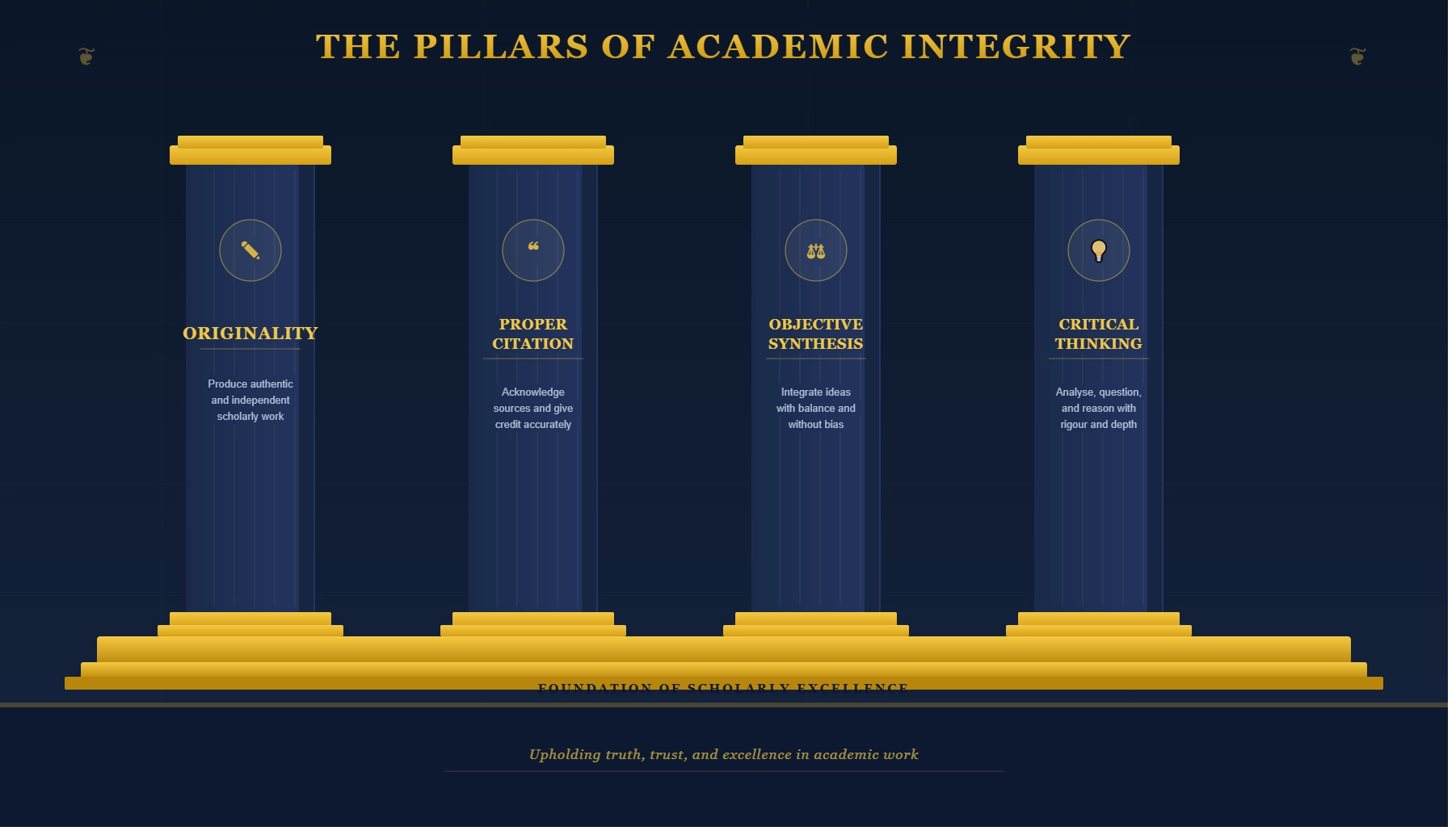
What is Plagiarism in Academic Writing and Why Does It Matter?
At its core, plagiarism is the act of presenting someone else's work, ideas, data, or words as your own without proper acknowledgment. In university settings, academic misconduct generally falls into several categories:
- Direct Plagiarism: Copying text word-for-word from a source without quotation marks or attribution.
- Self-Plagiarism: Submitting your own previously graded work for a new assignment without permission.
- Mosaic Plagiarism: Copying phrases from various sources and patching them together without original synthesis.
- Accidental Plagiarism: Unintentionally misquoting or forgetting to cite a source due to poor note-taking.
- AI-Generated Plagiarism: Copying text directly from AI generators like ChatGPT without original analysis or proper citation.
How to Write a Research Paper Step by Step While Maintaining Academic Integrity
Learning how to write a research paper step by step involves setting up a systematic workflow. When your writing process is organized, you are much less likely to make careless errors that lead to accidental plagiarism.
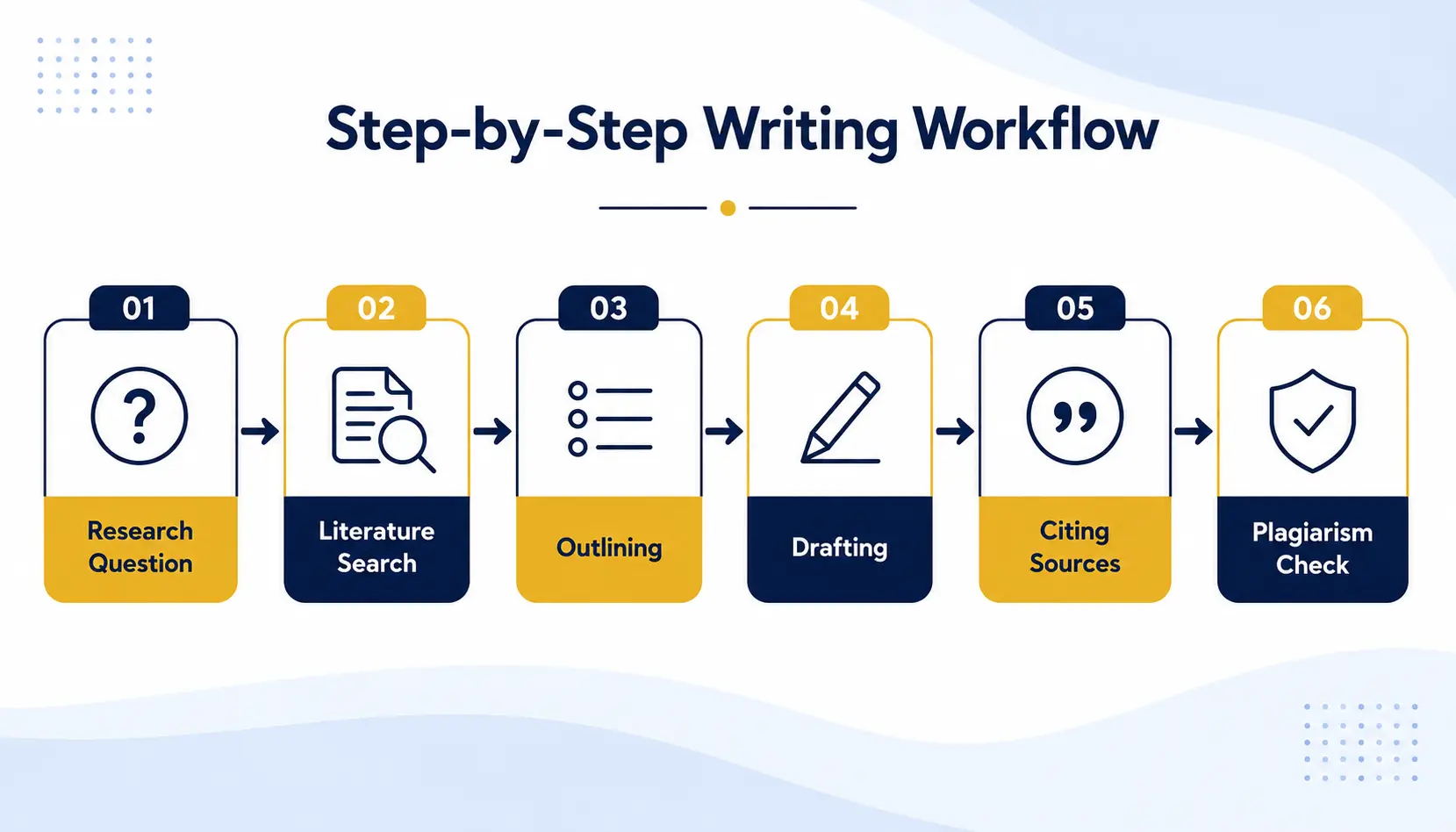
Step 1: Formulate a Clear Research Question and Thesis Statement
Every successful paper begins with a focused research question. Once you have a research question, develop a clear thesis statement that represents your central argument — the unique claim you will defend using evidence from peer-reviewed literature.
Step 2: Use Peer-Reviewed Sources and Academic Databases
Rely on established academic databases such as Google Scholar, Scopus, IEEE Xplore, or JSTOR to find peer-reviewed sources. Always note down publication details immediately so you do not lose track of where your information came from.
Step 3: Conduct a Systematic Literature Review
A literature review is an analytical synthesis that identifies patterns, debates, and gaps in existing research. Group your sources by theme rather than discussing them one by one to maintain an analytical tone and reduce the likelihood of copying descriptive text directly.
Step 4: Structuring Your Paper
An organized paper structure allows you to present your arguments logically. If you are struggling to map out your arguments or need assistance formatting complex essays, utilizing professional essay writing services can help you learn how to arrange your ideas in a clear academic manner that flows naturally from introduction to conclusion.
10 Ways to Avoid Plagiarism in Your Research Paper
1. Understand How to Not Plagiarize When Paraphrasing
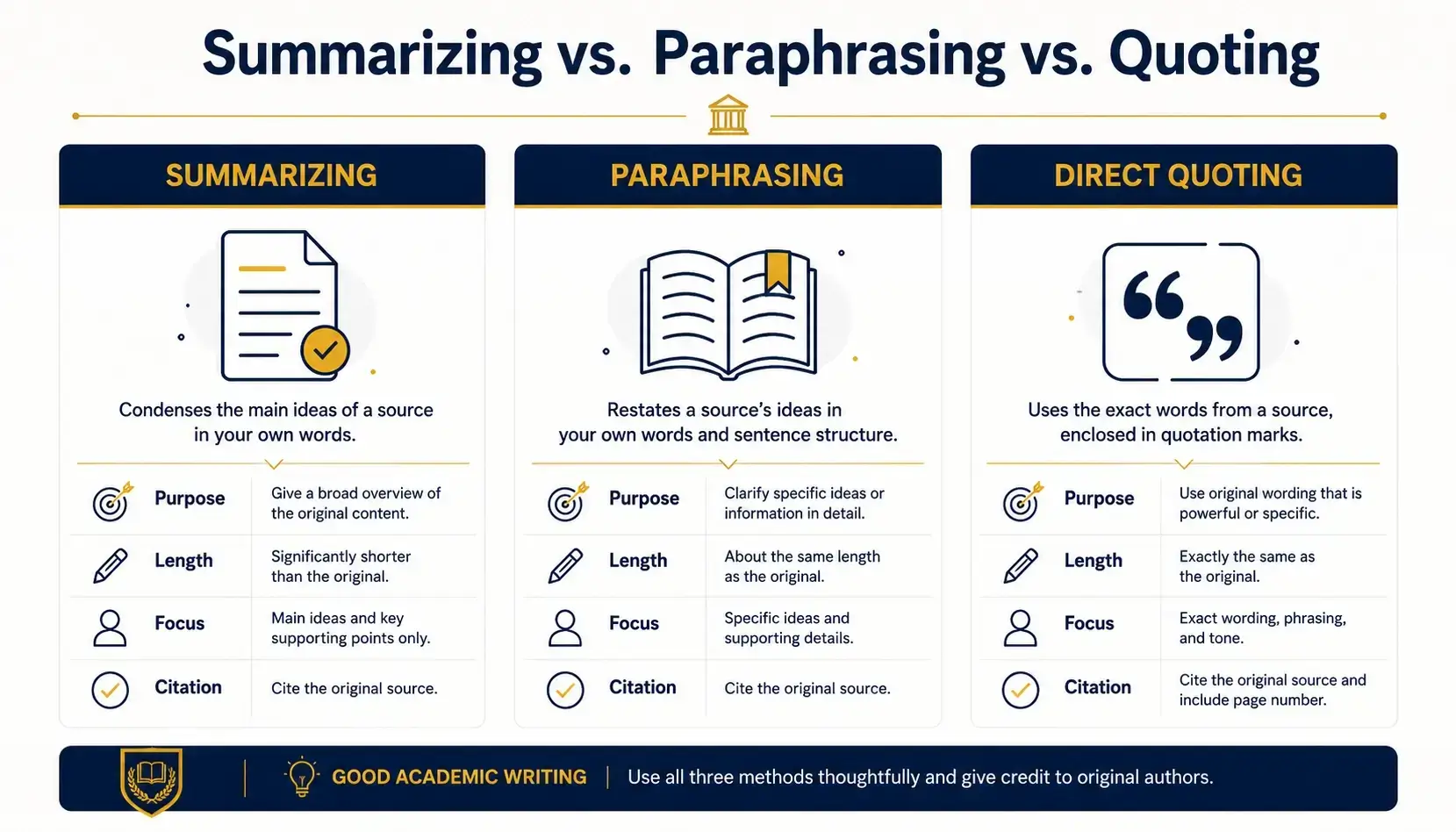
Paraphrasing is more than just swapping out words for synonyms. To paraphrase properly, fully digest the author's argument and explain it using your own unique sentence patterns and vocabulary. A helpful technique is to read the source text, close the tab, explain the concept out loud, and then write it from memory.
| Original Text | Poor Paraphrase | Acceptable Paraphrase |
|---|---|---|
| The integration of AI tools in higher education has transformed traditional assessment methods. | The implementation of AI software in college has changed old testing methods. | Assessment strategies in universities are undergoing significant revisions due to the rise of artificial intelligence (Author, 2026). |
2. Use Proper In-Text Citations and References
Whether you use APA format, MLA format, or Harvard format, consistency is key. Ensure every source in your bibliography matches an in-text citation in the body of your paper.
- APA Style: (Smith, 2023)
- MLA Style: (Smith 45)
- Harvard Style: (Smith, 2023, p. 45)
3. Master the Art of Direct Quoting
When using a direct quote, enclose the text in quotation marks and include the page number in your citation. Limit direct quotes to no more than 10% of your total paper to ensure your own voice remains dominant.
4. Keep Detailed Track of Your Sources
Use reference management software like Zotero, Mendeley, or EndNote. Document the author, title, year, journal, and page number of every article you read during your literature search.
5. Define Your Own Voice and Arguments First
Before you start writing, outline your own arguments and ideas. If you write your draft focusing on your own perspective first, you can then integrate sources to support, challenge, or refine your claims.
6. Navigate AI Tools Wisely
Use AI only as an assistant for structuring and refining your ideas. Never rely on AI to write entire paragraphs as this introduces risks including hallucinated citations and unoriginal phrasing. Always write the final text yourself.
7. How to Write a Research Paper Really Quickly Without Cutting Corners
Use the Pomodoro Technique to write in dedicated blocks of time, draft your body paragraphs first before writing the introduction, and keep your references organized from the very beginning. Rushing without a clear structure is one of the main causes of citation mistakes.
8. Use a Plagiarism Checker
Before submitting your work, run your draft through a reliable plagiarism checker. Take time to address any highlighted areas before submitting the assignment to your instructor.
9. Master Research Methodology
A strong methodology ensures your conclusions are genuinely your own. If you are working on a major project and feel unsure about how to structure your experimental design, seeking professional thesis and dissertation help can provide clarity and support as you outline your research framework.
10. Run a Comprehensive Final Review
Read through your paper line by line, checking every citation against your bibliography. If you want an experienced academic to review your formatting and sentence structure, professional editing and proofreading services can assist in refining your work to meet high academic standards.
Frequently Asked Questions
How do you write a research paper without plagiarizing?
Express others' ideas in your own words through careful paraphrasing, use quotation marks for direct quotes, and provide precise citations for all source material. Keeping careful research notes and organizing your bibliography from the start will help you avoid accidental omissions.
What are the 5 C's of academic writing?
The 5 C's are Clarity — writing in simple straightforward language. Conciseness — avoiding unnecessary filler words. Coherence — ensuring a logical flow of ideas. Completeness — providing sufficient evidence to support your arguments. Correctness — adhering to proper grammar and academic formatting styles.
Is 30% plagiarism too much?
In most universities, a 30% similarity score on Turnitin is considered high and will likely trigger a manual review. You should generally aim to keep your non-attributed similarity score as close to 0% as possible. Always check your university's specific guidelines regarding similarity index thresholds.
How to avoid plagiarism 5 easy methods?
Cite as you write — insert in-text citations immediately. Use quotation marks around any exact wording. Paraphrase completely using your own sentence structures. Track your sources actively as you research. Run a plagiarism detector before final submission.
What is the 3 pass method?
The 3 pass method is an efficient way to read academic papers. First Pass — read the title, abstract and headings. Second Pass — read the introduction, conclusion and diagrams. Third Pass — read the entire paper deeply to understand the methodology and limitations.
How to use ChatGPT without plagiarizing?
Treat ChatGPT as a brainstorming assistant rather than a writer. Use it to structure an outline or clarify concepts. Never copy and paste text directly from AI tools and always verify any facts or citations it provides as AI can occasionally generate inaccurate information.
Achieve Academic Excellence with ThesisArcPro
Writing an original, well-researched, and plagiarism-free academic paper requires time, patience, and meticulous attention to detail. At ThesisArcPro, we offer comprehensive professional academic support tailored to university students in the UK, USA, Australia, and Canada.
- Professional research paper writing and sourcing.
- Specialized thesis and dissertation help and consultation.
- Expert essay writing services and structure planning.
- Comprehensive editing and proofreading across APA, Harvard, MLA and Chicago styles.
Let us help you submit your work with confidence. Contact ThesisArcPro today to discuss your academic project.
Get Started Today →